
Signs Your Home AC Needs Repair Before You Consider Replacing It
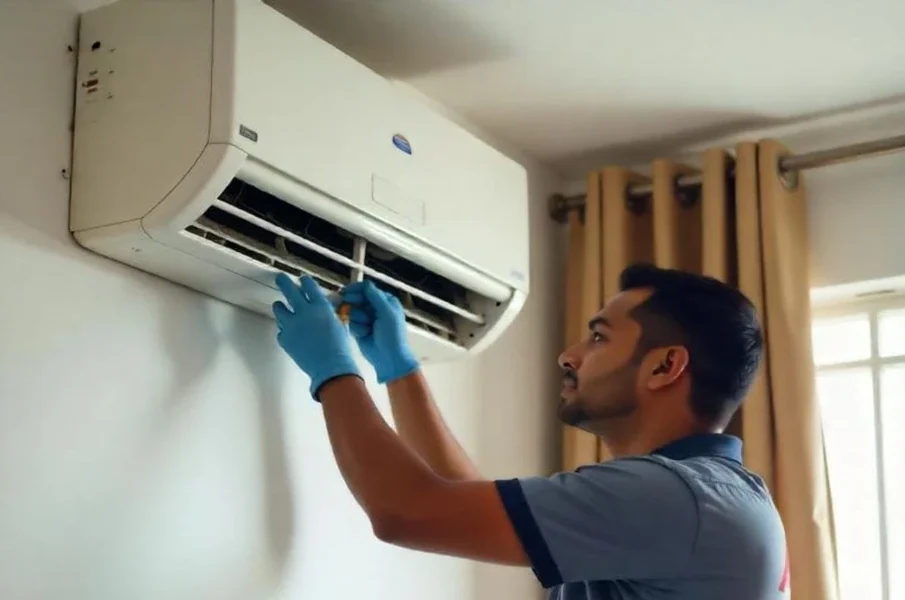
Your AC kicks on, runs for 20 minutes, and the air coming out of the vents is barely cooler than the room. You’re sweating through a Tuesday night in July, and your brain jumps straight to “I need a whole new system.” Before you spend $5,000 to $12,000 on a replacement you might not need, stop. The real answer is usually cheaper, faster, and closer than you think.
Most homeowners replace their air conditioner three to five years too early because they can’t read the difference between a dying system and a sick one. These two things are not the same, and confusing them costs real money. This guide walks you through the clearest warning signs that a repair is the right call, the one math test that separates a fixable system from a lost cause, and exactly what to do before a technician shows up at your door.
Why Your AC Is Under More Stress Than You Might Realize
Air conditioning isn’t optional for most American households anymore. According to the U.S. Energy Information Administration’s 2020 Residential Energy Consumption Survey, 88% of U.S. households use air conditioning. That near-total adoption means the average central system runs thousands of hours over its lifetime, accumulating wear on compressors, coils, capacitors, and contactors the same way a car engine accumulates miles.
Humid Mid-Atlantic climates like Maryland add extra strain. The system isn’t just cooling the air, it’s wringing moisture out of it all summer. That continuous dehumidification load shortens component life faster than the same system would degrade in a dry southwestern state. So when something starts going wrong, it tends to show up in predictable ways.
Six Warning Signs That Point Toward a Repair
Not every AC problem announces itself with a full shutdown. Most failures build gradually, and catching them early is the difference between a $200 capacitor swap and a $1,800 compressor job.
- Warm or lukewarm air from the vents. The thermostat is set to 72°F, the system is running, but the air feels like it’s coming from a hair dryer on low. This usually means low refrigerant, a failing compressor, or a frozen evaporator coil. All three are repairable.
- Short cycling. The unit turns on, runs for two or three minutes, then shuts off before reaching the set temperature. Short cycling destroys components through repeated start-up stress and often traces back to a bad thermostat, a low refrigerant charge, or an oversized unit.
- Unusual sounds. A healthy AC hums. Banging usually means a loose or broken part inside the air handler. Squealing points toward a worn belt or failing fan motor bearing. A clicking sound that continues after startup suggests a failing relay or thermostat issue. None of these sounds mean “new system.” They mean “call someone today.”
- Ice on the refrigerant lines or the indoor coil. Counterintuitive as it looks, ice forming on your AC is not a sign it’s working too hard. It’s a sign of restricted airflow or low refrigerant. A dirty filter or blocked return vent is often the culprit and costs nothing to fix.
- Water pooling around the indoor unit. The condensate drain is clogged. This is one of the easiest and least expensive repairs in HVAC. Left alone, it damages drywall, subfloor, and eventually the air handler itself.
- Higher energy bills with no change in usage. A system working harder to produce the same result is losing efficiency. That’s a symptom, not a verdict. Dirty coils, low refrigerant, and failing capacitors all cause efficiency drops that a tune-up or targeted repair can reverse.
Notice what’s missing from that list: age alone. A 14-year-old system throwing a $180 capacitor failure is still worth repairing. Age matters, but only when you factor it into the actual cost equation.
The $5,000 Rule: One Calculation That Tells You a Lot
HVAC technicians have used a simple formula for years to cut through the repair-vs-replace paralysis. Multiply the age of your system in years by the estimated repair cost in dollars. If the result exceeds $5,000, replacement starts making financial sense. Below that number, the repair is almost always the smarter move.
Here’s how that plays out in practice:
| System Age | Repair Quote | Calculation | Verdict |
|---|---|---|---|
| 6 years | $350 | 6 × $350 = $2,100 | Repair. Clear. |
| 10 years | $420 | 10 × $420 = $4,200 | Repair. Still makes sense. |
| 10 years | $700 | 10 × $700 = $7,000 | Lean toward replacement. |
| 14 years | $500 | 14 × $500 = $7,000 | Seriously consider replacing. |
The formula isn’t perfect, but it forces you to weigh two things that actually matter together: how much useful life is left, and how serious the current failure is. A big repair on a young system is usually fine. The same repair on an aging system means you’re paying to extend something that’s already near the finish line.
One extra wrinkle worth knowing: if your system was manufactured before 2010, check whether it uses R-22 refrigerant. R-22 production was banned in 2020, and only recycled stockpiles remain. Any repair that requires adding refrigerant on an R-22 system carries a sharp premium that can flip a borderline repair decision into a clear replacement one.
“The best way to keep your system lasting closer to 15 years than 10 years is to have proper maintenance by a professional at least once a year.”
This view, shared widely among HVAC professionals, reflects an industry consensus: neglect accelerates failure, and most mid-life breakdowns are the direct result of skipped maintenance rather than fundamental system failure.
What Happens During an AC Repair Diagnostic
When a technician arrives, the first 20 minutes determine everything. They’re not guessing. A proper diagnostic follows a logic sequence that HVAC professionals sometimes call the STAR check: Statically measure refrigerant pressure, Test electrical components with a multimeter, Assess airflow at the supply and return vents, Review the condensate drain and coil condition. Each step either clears a suspect or narrows the cause.
Refrigerant pressure readings alone tell a trained eye whether the charge is low, whether there’s a leak, or whether the compressor is losing capacity. Electrical testing catches failing capacitors and contactors before they take out more expensive parts. Airflow measurement reveals whether a dirty coil or blocked ductwork is making a functioning system perform like a broken one.
According to the U.S. Energy Information Administration, electricity consumption for air conditioning accounted for about 19% of total residential electricity consumption in U.S. homes in 2020. A system limping along with a dirty evaporator coil or low refrigerant charge burns significantly more power for the same output, which shows up directly on your monthly bill. Fixing the underlying fault doesn’t just restore comfort. It restores efficiency.
Three Things to Do Before the Technician Arrives
You can cut diagnostic time, lower your bill, and make sure the technician gives you an accurate picture by doing these three things in advance.
- Change or check the air filter. A clogged filter causes roughly 25% of the “my AC isn’t cooling” calls that turn out to be non-issues. Replace it before the tech arrives and note the date so they know the filter history.
- Write down the system’s age and any recent repair history. Check the data plate on the outdoor condenser unit. It shows the manufacturing date. Pull any invoices from prior repairs. This context helps the technician apply the $5,000 rule accurately and helps you make an informed decision if replacement comes up.
- Clear 18 to 24 inches around the outdoor unit. Shrubs, debris, and mulch piled against the condenser restrict airflow and can cause high-pressure shutdowns that mimic more serious failures. Clear the area before the tech checks the unit and you’ll get a cleaner diagnosis.
When you’re ready to call someone, make sure it’s a qualified local provider. A good residential AC repair service will give you a written diagnosis with cost options before any work starts, not a quote delivered verbally at the door.
When Replacement Actually Makes Sense
Some systems are genuinely past the point of return. A compressor failure on a 16-year-old R-22 system almost certainly clears the $5,000 threshold, and replacing the compressor alone on aging equipment often triggers a second failure within 18 months. At that point, you’re not repairing a system. You’re keeping one on life support.
The honest answer most homeowners need to hear is this: if your system is under 12 years old and showing any of the symptoms listed above, a repair will almost always cost less, extend your equipment’s useful life, and solve the problem for years. Don’t let one bad July convince you to spend what you don’t need to spend.
Get a diagnosis. Run the numbers. Then decide.


