
How to Choose the Right Size Home Backup Generator
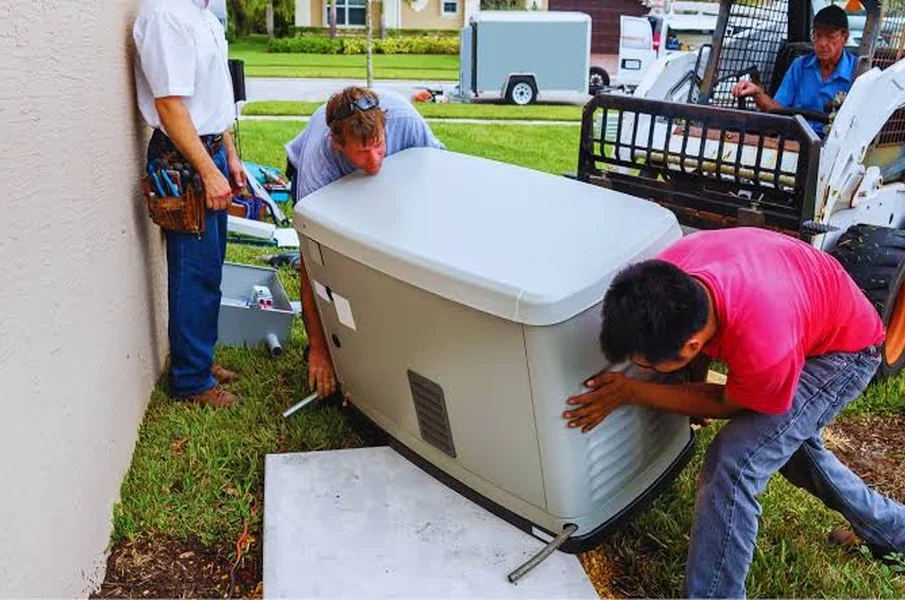
Most homeowners get generator sizing wrong in the same direction: too small. They pick a number that sounds big, plug in the fridge and a few lights during a storm, and then discover the AC won’t start because the surge load trips the unit at the worst possible moment. Choosing the right size isn’t guesswork. It’s arithmetic, and it takes about 20 minutes when you know what you’re looking for.
Why Sizing Has Become More Urgent
Grid reliability in the United States has been sliding for years. Between 2013 and 2021, the average duration of a power outage in the U.S. grew from approximately 3.5 hours to more than seven hours, and the frequency of outages increased from 1.2 to 1.42 events per customer per year, according to EIA data reported by Scientific American. That trend has real dollar consequences. Power outages cost the U.S. economy an estimated $150 billion per year, according to Lawrence Berkeley National Laboratory, and for individual households, a four-day outage costs an average of $1,700 in direct expenses like food spoilage, hotel stays, and generator fuel.
If you live in Florida, the Gulf Coast, or anywhere that sees hurricane seasons, those numbers feel personal. A generator sized correctly on day one saves you from borrowing one from a neighbor on day three of a blackout, and it also saves you from over-buying a 26 kW unit when a 14 kW would have done the job fine.
The Three-Tier Power Profile Framework
Before you start adding up watts, decide which of three power profiles fits your household. This is the first decision that shapes every number that follows.
- Tier 1 – Essentials only: refrigerator, lights, phone charging, one window AC unit, and a sump pump if applicable. Most homes in this tier need 5,000 to 8,000 watts of running capacity.
- Tier 2 – Comfortable backup: everything in Tier 1, plus central HVAC, the garage door, and basic cooking. This is where most family homes land, and it typically calls for 12,000 to 18,000 watts.
- Tier 3 – Whole-home continuity: all circuits active, including electric dryer, water heater, home office equipment, and EV charging. Expect to need 20,000 watts or more.
Pick your tier honestly. The people who overshoot into Tier 3 when they actually live like Tier 2 pay thousands of extra dollars upfront and burn more fuel every hour the generator runs. The people who undershoot regret it by hour six of a blackout.
The Wattage Math That Actually Matters
Running watts keep an appliance going. Starting watts, sometimes called surge watts, are the spike an electric motor needs in the first second of operation. That spike is what most people forget, and it’s what trips undersized generators.
Motors are everywhere in your home: the AC compressor, the refrigerator compressor, the well pump, the sump pump. Each one draws two to three times its running wattage for a fraction of a second at startup. A 3-ton central air conditioner common in southern homes, for example, typically draws around 3,500 running watts but can surge to 6,000 to 8,000 watts at startup. Add a refrigerator at 700 running watts with a 2,200-watt surge, lighting at 400 watts, and a few devices, and a modest home is already pushing 10,000 to 12,000 running watts before you’ve touched the stove or the washing machine.
The formula is simple. Add up the running watts of every appliance you want to power simultaneously. Take your single highest-surge appliance and add its starting watts on top. That sum is your minimum generator requirement. Then add a 20% buffer for seasonal variation and any appliances you might add later.
| Appliance | Running Watts | Starting Watts |
|---|---|---|
| Central AC (3-ton) | 3,500 | 6,000-8,000 |
| Refrigerator | 700 | 2,200 |
| Well pump (1 HP) | 1,000 | 3,000 |
| Sump pump | 800 | 1,300 |
| Lighting (whole home) | 400 | 400 |
| Microwave | 1,200 | 1,200 |
| Phone/laptop chargers | 300 | 300 |
Run those numbers for your actual home, not a hypothetical average one. The nameplate label on the back of each appliance gives you the running amp draw; multiply by 120 or 240 volts to get watts.
Fuel Type Changes Your Planning Horizon
Once you’ve settled on a size, fuel type becomes the next real decision. Gasoline is convenient for short outages because you probably already have some on hand, but it degrades in about 30 days without a stabilizer and you’re at the mercy of whatever lines form at the pump after a major storm. Propane stores indefinitely and works well for planned standby systems with a dedicated tank. Natural gas, where it’s available, removes the refueling problem entirely since the line feeds continuously.
Knowing how much gas does a generator use is genuinely important before you commit to a fuel plan. A mid-size 12 kW unit running at 50% load burns fuel at a meaningfully different rate than the same unit at full load, and that difference compounds fast over a multi-day outage. A 500-gallon propane tank gives you real breathing room; a five-gallon gas can does not.
“Extreme weather is the number one driver of power outages. As it gets wetter and the weather becomes more extreme, we can expect more power outages.”
That quote comes from Joan Casey, an environmental epidemiologist at the University of Washington, speaking to Scientific American about the EIA data showing average outage duration roughly doubling from 2013 to 2021. The practical implication: size for a long event, not a short one. A generator that gets you through 12 hours is not the same asset as one that gets you through five days.
Portable vs. Standby: The Decision That Dictates Everything Else
Portable generators work for Tier 1 situations. You wheel them out, run an extension cord, and accept that you’re not powering the HVAC. They’re cheaper upfront, but they require you to be home, they need manual refueling every several hours, and they can’t connect to natural gas lines.
Standby generators install permanently, connect through an automatic transfer switch, and start themselves within seconds of an outage. They run on natural gas or propane through a fixed line or tank. For Tier 2 and Tier 3 households, especially in hurricane-prone areas, a standby unit is the only option that actually keeps the house functional without your constant attention.
The U.S. Energy Information Administration reports that most distribution customers are simply without electricity when outages occur, because backup generation remains the exception rather than the rule. That gap is narrowing as more homeowners move toward standby systems, but the majority of people still rely on nothing at all.
Four Steps to Get Sizing Right Before You Buy
- Choose your power tier. Be honest about what “staying comfortable” actually requires in your home.
- List every appliance you’d run simultaneously at peak usage. Don’t forget the well pump, medical devices, or any motorized equipment.
- Calculate running watts, add the single largest starting-watt appliance, then add 20%. That number, converted to kilowatts, is your floor.
- Match your fuel choice to your outage scenario. If you live somewhere that sees week-long blackouts after hurricanes, natural gas or a large propane tank beats any gasoline plan.
Size for your worst case, not your average Tuesday. The generator you buy this year will be the one you rely on during the next major storm, and that is not the time to wish you had gone one size up.


